
Sedalia, Colorado · Water heater repair
24/7 Emergency Line Open
Water Heater Repair in Sedalia, CO: No Hot Water, Leaks and Noise
A water heater repair covers the tank that has stopped heating, the one that drips onto the floor and the one that rumbles at night. It runs from small parts such as thermocouples, igniters, elements and relief valves up to the honest call that a tank has reached the end of its life. Dispatch can say whether a visit today is possible.
- Licensed and insured plumbers
- Same-day service when available
- 24/7 emergency dispatch
No hot water: is it a gas or an electric problem?
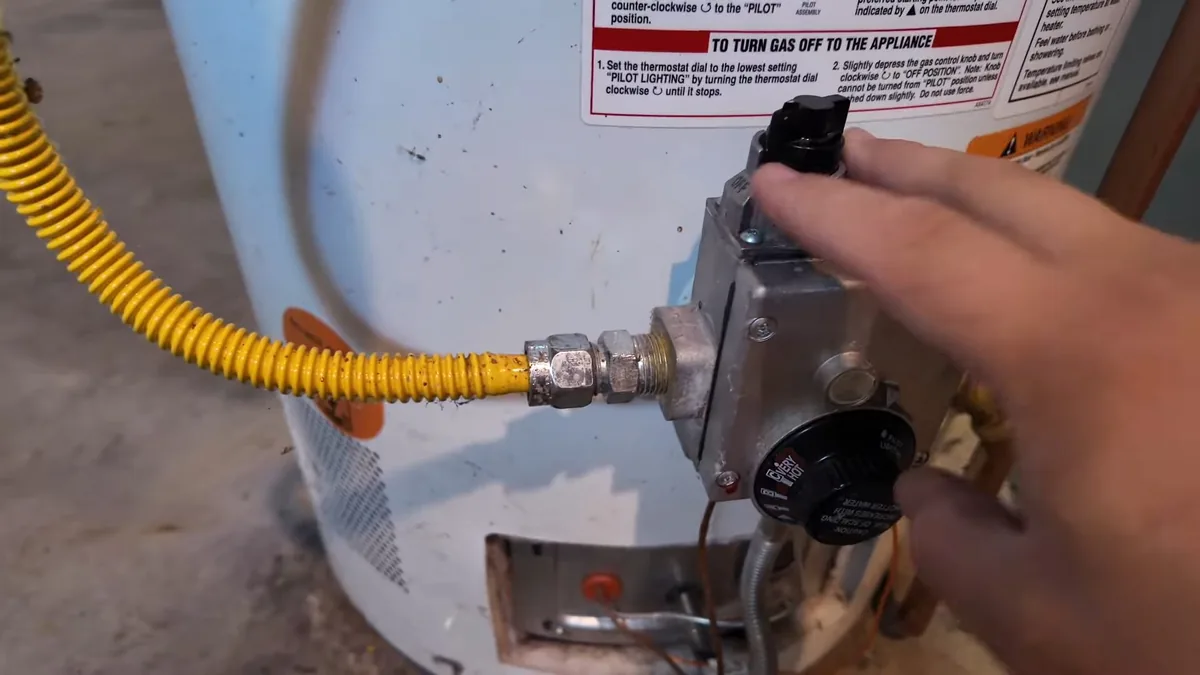
The first thing a plumber asks is what fuel the heater uses, because the likely causes differ completely. A gas unit depends on a flame and a vent. An electric unit depends on power, a thermostat and heating elements. The table shows what each tends to do when it fails.
| Symptom | Gas tank | Electric tank |
|---|---|---|
| No hot water at all | Pilot out, failed thermocouple or igniter, gas supply off | Tripped breaker, failed thermostat or both elements dead |
| Lukewarm water | Dirty burner, weak flame or sediment on the tank bottom | One failed element or a thermostat set too low |
| Hot water runs out fast | Sediment buildup or a failing dip tube | A failed lower element or sediment buildup |
| Rumbling or popping | Sediment cooking at the tank bottom | Sediment around the elements |
| Water on the floor | Fitting, valve or tank leak | Fitting, valve or tank leak |
A plumber can usually tell which one it is from the symptoms and a few minutes at the unit. Many of these repairs are small parts, and a unit that is otherwise sound can be put back to work in one visit. Having the make, the model and the age from the label ready lets dispatch pass useful information along before the visit.
Quick checks before you call
A few checks cost nothing and sometimes solve the problem. They also give dispatch useful information.
- Look at the breaker panel. If the water heater breaker has tripped, reset it once. If it trips again, leave it off and call.
- Check the thermostat setting. A setting that has been bumped down gives lukewarm water.
- For a gas unit, look at the pilot light window. Follow the label to relight it only if the instructions are clear and there is no gas smell.
- Touch the pipes at the unit. If the cold inlet is warm and the hot outlet is cold, something inside the tank is wrong.
- Note any sound, smell, leak or error code, and write down the make and age on the label.
No hot water this morning?
Call dispatch and tell them whether the unit is gas or electric. A plumber serving your area can say whether it is a quick repair.
A leaking tank: shut it down first
Water under a water heater has a few possible sources, and they differ in seriousness. A drip from the temperature and pressure relief valve or its discharge pipe often comes from a worn valve or from excess pressure. A leak at the inlet or outlet fittings or the drain valve is usually a repair. A leak from the tank body itself, or a rusty weep along a seam, means the tank has failed, and replacement is the answer.
Turn off power at the breaker or the gas control, close the cold water inlet valve above the unit and open a hot tap in the house to relieve pressure. Mop up standing water so it does not reach walls or flooring. If the unit sits in a closet or a basement and water has spread, the removal and drying steps are described on the drying out a wet utility room.
When a tank is past repair, the next question is what to put in its place. The replacement page covers fuel type, sizing and permits, and the tankless water heater page covers the alternative.
Sediment, flushing and maintenance
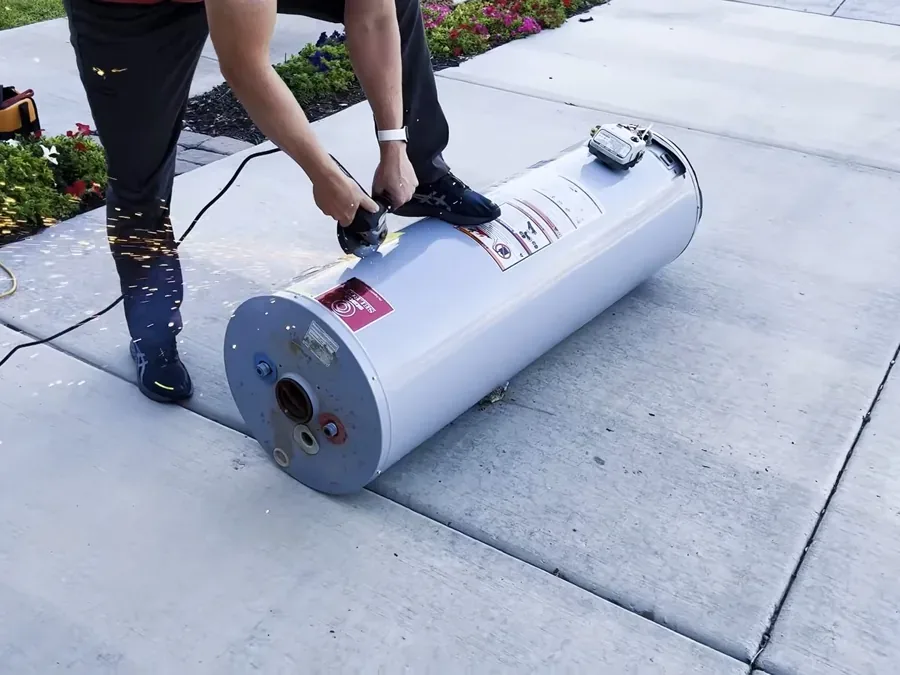
Minerals in water settle to the bottom of a tank over time. That layer insulates the water from the burner or element, so the unit works harder, runs hotter at the bottom and starts to rumble or pop. Flushing the tank clears the layer, and doing it early is easier than doing it after the sediment has hardened.
A plumber also checks the anode rod, which protects the tank from corrosion and wears out first. Replacing it is a small job compared with replacing the tank. A yearly look at the relief valve, the vent and the connections catches small problems before they become a flood. An old tank that has never been flushed may not tolerate a hard flush, and the plumber will say so before starting.
Pilot lights, igniters, elements and thermostats
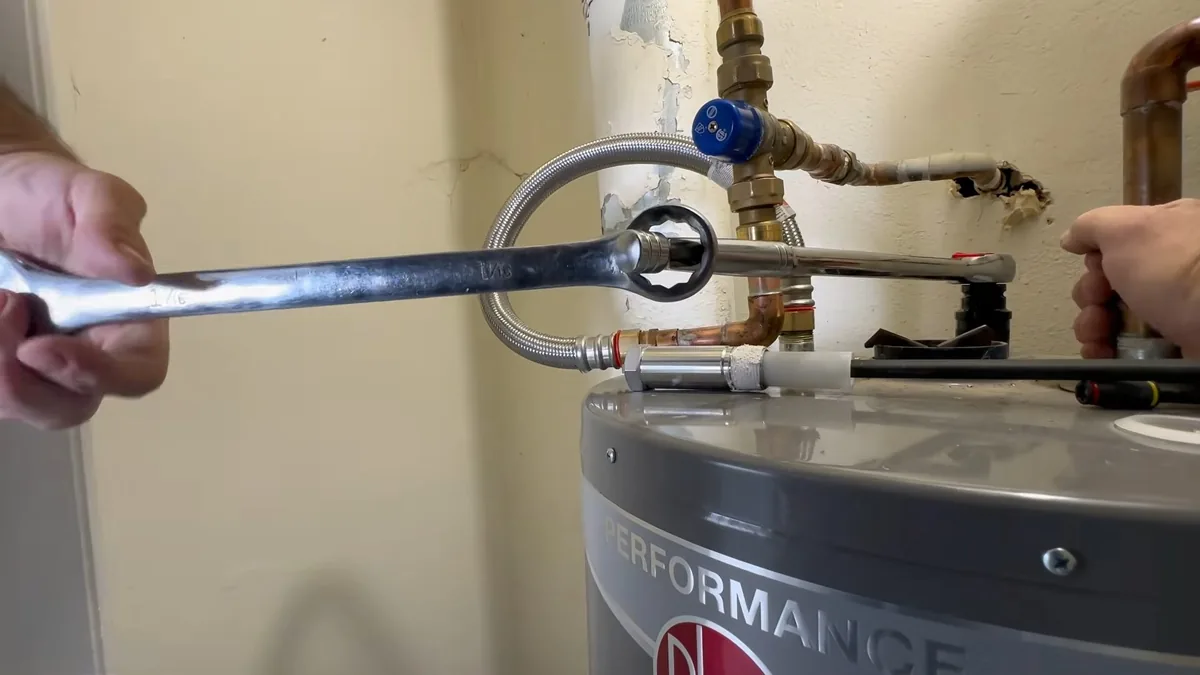
Most repairs come down to one part. On a gas unit, the thermocouple senses the pilot flame and tells the gas valve to stay open, and when it fails the pilot will not stay lit. Newer units use an electronic igniter instead of a standing pilot, and the igniter can wear out. A dirty burner or a blocked flue gives weak heat and warns of safety problems.
On an electric unit, two heating elements and one or two thermostats do the work. A failed upper element leaves you with little hot water, and a failed lower element leaves you with a short supply. Thermostats, high limit switches and wiring are all tested with a meter. Noise is usually sediment, though a high-pitched whine can mean a failing element or a pressure problem.
Repair or replace, and what a permit has to do with it
Repair makes sense when the tank is sound and the failed part is small and easy to replace. Replacement makes sense when the tank leaks, when repairs are stacking up, or when the unit is well past the age at which most tanks are expected to give out. A plumber can say which side of the line your unit sits on, and give the reasoning in plain terms. Ask what the unit's age, its condition inside and the cost of the repair add up to, and whether the repair carries any warranty on the work.
Permits for water heater work
Under county rules, installing, altering, repairing or replacing plumbing calls for a mechanical or plumbing permit from the Building Division. In unincorporated Douglas County a standard tank replacement falls under the mechanical permit, and an emergency swap needs its permit by the next working business day. See the county's mechanical permit page.
When you get a quote for a repair or a replacement, ask who pulls the permit and whether it is included.
Water heater leaking or cold?
Call dispatch now. A licensed and insured plumber serving your area can tell you whether repair or replacement is likely.
Water heater questions
Can a water heater be repaired, or does it need replacing?
Many problems are repairs: a failed thermostat, element, igniter or thermocouple, a worn relief valve or a leaking fitting. A leak from the tank body itself, or a unit that needs repeated repairs, usually means replacement. A plumber can see which situation you are in and explain the choice.
How long should a tank water heater last?
Tank life varies with the model, the water and how well the unit is maintained. Flushing and anode rod checks can help extend it, and a plumber can tell you how much life a particular tank has left. A unit that is leaking or failing repeatedly is nearing the end whatever its age.
Who fixes water heaters?
A licensed plumber can repair both gas and electric tank water heaters, including parts, valves, venting and connections. Gas units involve a flame and a vent, so the work is best left to a professional.
What size water heater do I need?
Size depends on how many people live in the home, how many bathrooms it has and how much hot water you use at once. A plumber can match the tank size or the flow rate of a tankless unit to your household. A unit that is too small runs out, and one that is too large wastes energy.
What if water from the heater is pooling outdoors or in a garage?
Trace where it starts. Water coming from the tank, its supply lines or the relief valve line is a water heater problem, so shut the cold supply valve and turn off the gas or power, then call. Water from a hose bib or sprinkler line is a different trade, though a plumber can still shut off the main supply to stop the flow.
Water heater trouble in Sedalia?
Dispatch is on the line now. Say whether the unit is gas or electric and what it is doing, and a licensed and insured plumber serving your area will be arranged.
- Licensed and insured plumbers
- Same-day service when available
- 24/7 emergency dispatch